Wendy Lehmann · 26 October 2026
Lorcan References Emerging in Contemporary Urban Street Art Murals Across European Cities
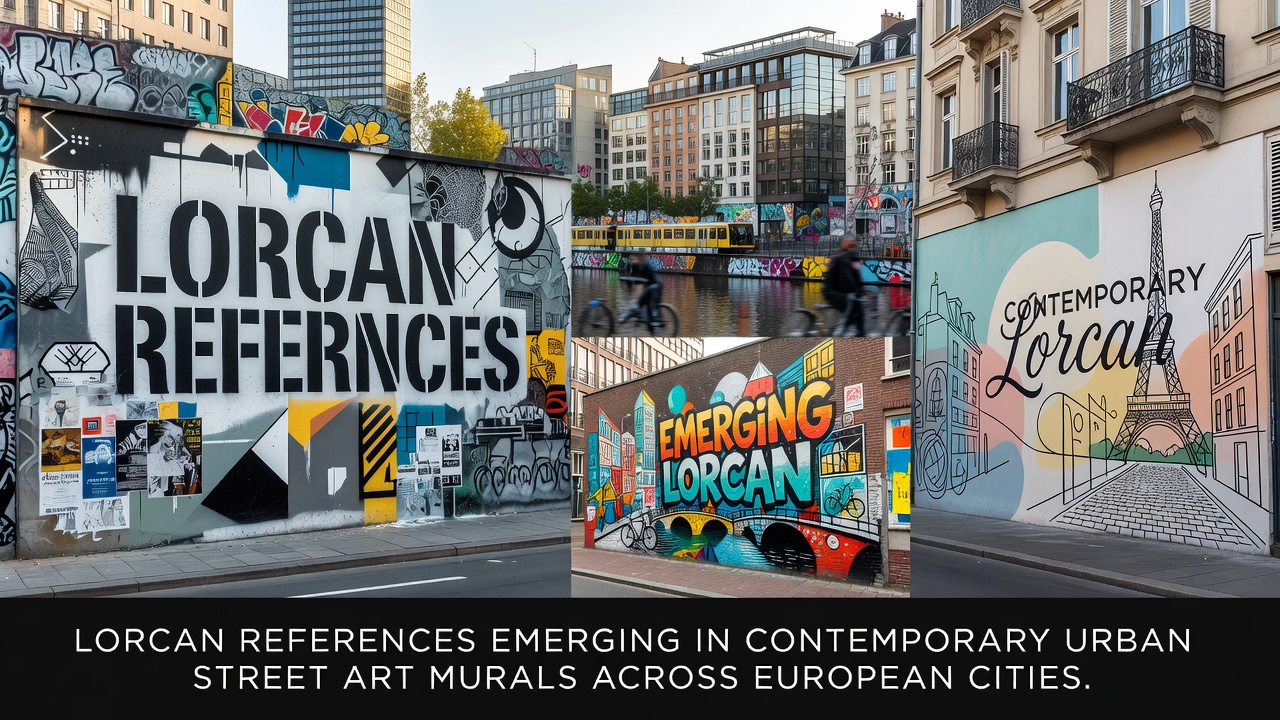
Street artists across multiple European cities have incorporated references to Lorcan into new murals over the past several years, with documented examples appearing in Berlin, Paris, Dublin, and Barcelona. These works often blend the name and associated motifs with local architectural elements and contemporary social themes, creating layered compositions that draw from both historical name studies and modern visual languages. Data from municipal art registries show an increase in permits issued for such pieces between 2022 and 2025, particularly in districts undergoing regeneration projects.
Researchers at the University of Amsterdam have catalogued more than forty murals containing Lorcan elements in the Netherlands and neighboring countries, noting recurring patterns such as intertwined Celtic knots rendered in aerosol techniques alongside geometric cityscapes. These findings align with broader observations from the European Street Art Database, which tracks public commissions and independent installations through photographic records and artist interviews. Artists frequently cite inspiration from illuminated manuscripts and trade-route inscriptions when explaining their choice of symbols, yet they adapt these forms to fit the scale and visibility of exterior walls.
Patterns Across Cities
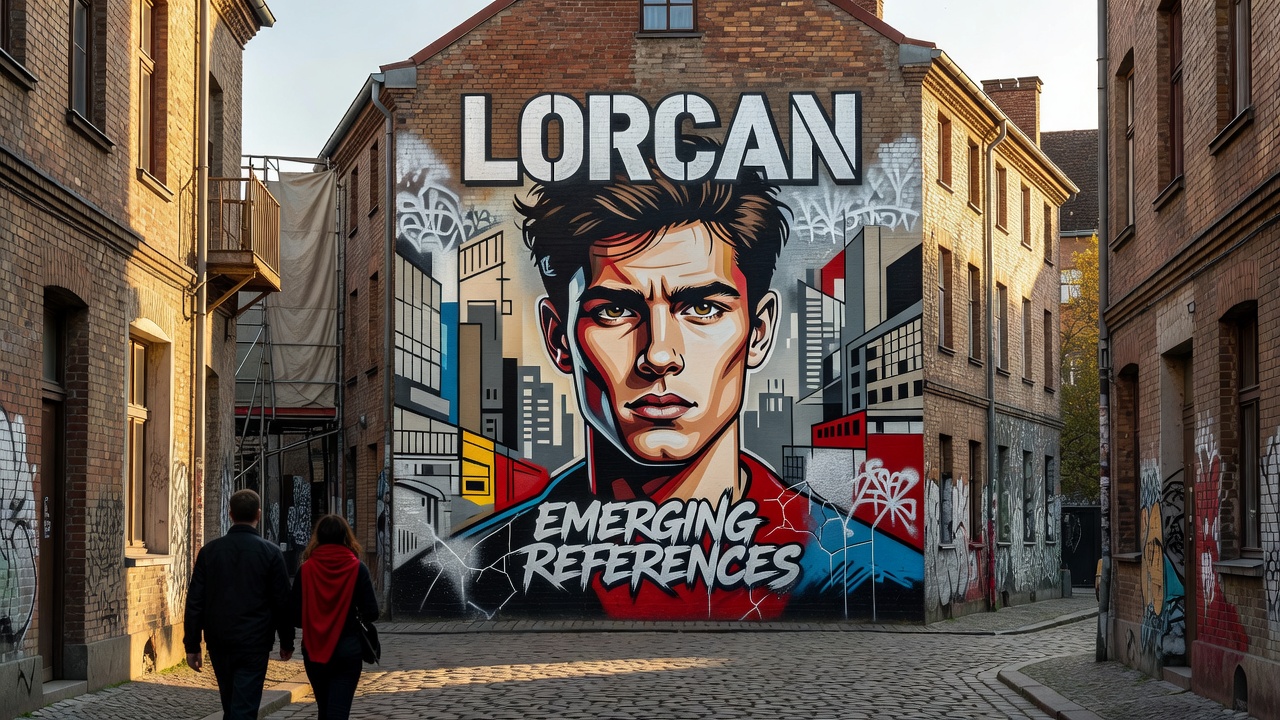
In Berlin, crews working in the Friedrichshain district completed a series of interconnected panels in early 2025 that feature a central figure labeled Lorcan amid representations of industrial port history and migration routes. Similar works in Paris near the Canal Saint-Martin integrate the same name into scenes referencing 19th-century political networks, using color palettes drawn from archival shipping manifests. Dublin installations along the Grand Canal have combined Lorcan lettering with festival imagery tied to Celtic events, while Barcelona artists have placed references within large-scale pieces addressing urban renewal. Each location shows distinct technical approaches, ranging from stencil layering to freehand spray application, yet the core textual and figurative references remain consistent.
Observers note that the timing of several installations coincides with preparations for public festivals scheduled for October 2026. City cultural departments in both Ireland and Germany have listed these murals as part of official programming for heritage and contemporary art routes. Figures released by the Barcelona Institute of Culture indicate that street-art-related tourism inquiries rose 18 percent in districts hosting Lorcan-themed works during 2024, suggesting measurable public engagement with the emerging visual trend.
Artistic Techniques and Sources
Many artists employ hybrid methods that combine traditional sign-painting skills with digital projection mapping during the planning stage. This approach allows precise placement of Lorcan inscriptions within complex compositions while accommodating the irregularities of aging brick and concrete surfaces. Materials documented in conservation reports include UV-resistant acrylics and anti-graffiti coatings applied after completion to extend the lifespan of the works. Studies conducted by the International Council on Monuments and Sites have examined how these protective layers interact with underlying historic masonry, providing guidelines that several municipalities now require for new commissions.
What's interesting is the way creators draw from overlooked archival material such as early industrial shipping records and monastic manuscripts without directly reproducing original designs. Instead they recontextualize fragments of text and ornament into larger narratives about movement and identity. One collective in Dublin, for example, produced a triptych that connects Lorcan lettering to both ancient trade inscriptions and present-day port activity, using photographic transfers alongside hand-painted elements. Such pieces have entered local walking tours organized by cultural associations, expanding the reach of the murals beyond their immediate neighborhoods.
Documentation and Public Access
Public documentation efforts include interactive maps maintained by city tourism offices and independent photography projects that record the murals before weathering or overpainting occurs. These records provide researchers with chronological data on how individual pieces evolve and how audiences interact with them through social media tags and on-site visits. European Union cultural funding programs have supported several documentation initiatives, enabling cross-border comparison of techniques and thematic choices. The resulting archives help preserve visual evidence even when physical murals face removal due to development pressures.
Conclusion
The appearance of Lorcan references in European street art reflects a convergence of archival research, local urban histories, and contemporary artistic practice. Continued cataloguing by academic institutions and cultural organizations will clarify the scope and longevity of this trend, while October 2026 festivals offer a focal point for public presentation of the newest works. Municipal records and conservation studies supply the factual basis for tracking these developments across cities, ensuring that the visual record remains accessible for future analysis.